Compare
Slapp vs Pimsleur
Verdict: Pick Pimsleur for audio-first commuting when you can speak aloud and want strict spaced recall. Pick Slapp for visual scene context, quieter public practice, and lower subscription cost.
At a glance
| Feature | Slapp | Pimsleur |
|---|---|---|
| Format | Visual scenes + audio | Audio-only drills |
| Speaking | Optional shadowing | Required spoken responses |
| Session length | 5–10 min modules | ~30 min lessons |
| Public commute | Quiet-friendly | Needs privacy to speak |
| Offline | Full modules | Lesson downloads |
| Price | $4.99/mo or $39.99/yr | Premium audio pricing |
| Best for | Visual learners, quiet commute | Drivers who talk aloud |
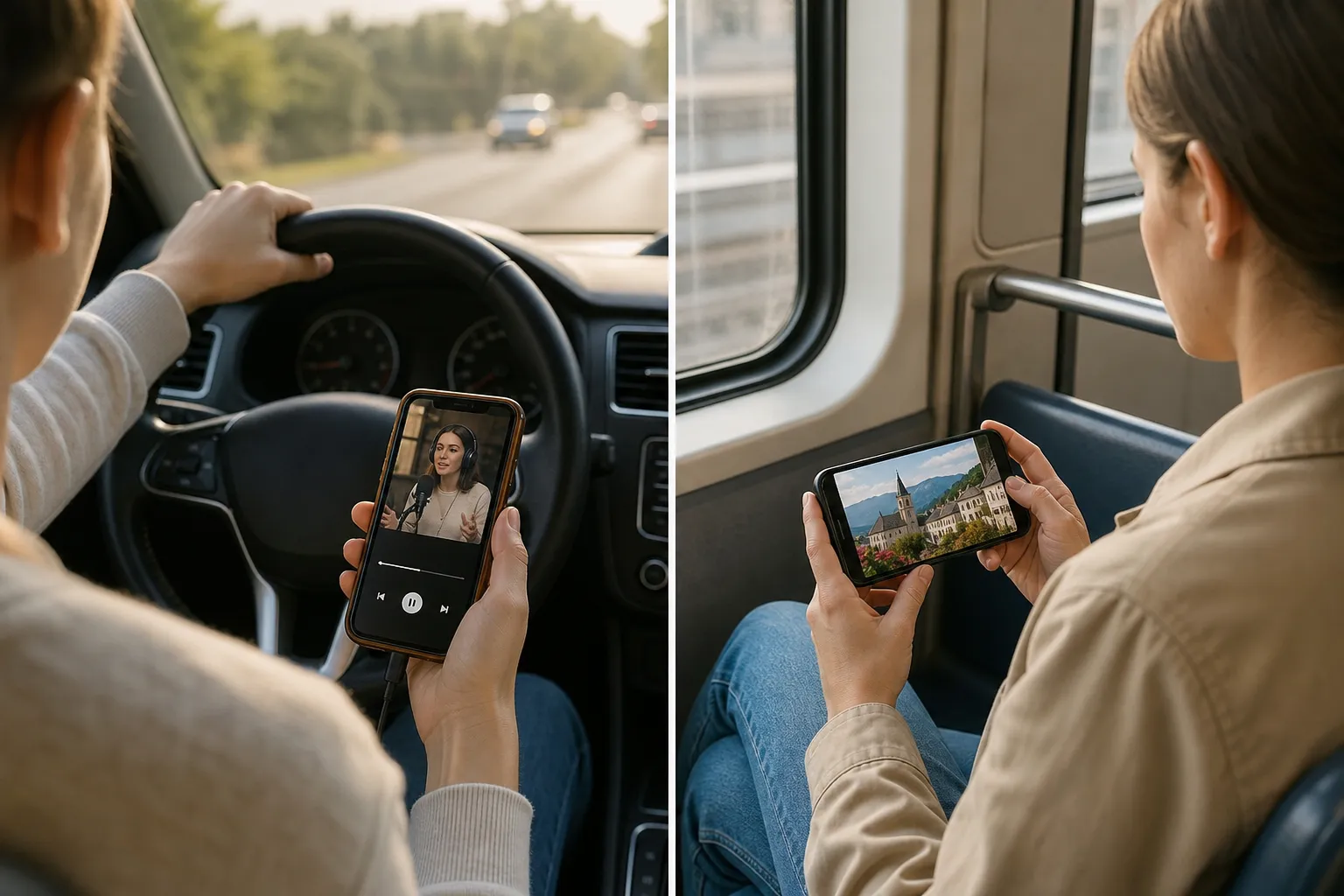
Pimsleur is the grandfather of audio language courses — listen, repeat on cue, spaced recall, no screen required. Slapp is visual-audio scenes you replay on screen or glance at while listening. Both favor repetition over grammar tables; both work offline for subscribers. The choice often comes down to whether your hands and eyes are free. Drivers love Pimsleur's speak-now prompts; subway riders love Slapp's text-plus-image anchors when they cannot talk aloud. This page compares methods without claiming one replaces the other — many adults use Pimsleur in the car and Slapp on the platform.
Audio-only vs audio-visual scenes
Pimsleur removes visuals entirely — you build sound patterns and responses auditorily. Powerful for pronunciation rhythm; harder if you need spelling or situational context early.
Slapp ties audio to images and text — you see the café, read the line, hear the phrase together. Helps English speakers who anchor memory visually.
Active drilling vs calm replay
Pimsleur interrupts with "say the phrase now" — active recall baked in. Effective but intense; awkward on a crowded train.
Slapp lets you repeat silently or whisper along — calmer, more passive-friendly, less speaking pressure.
Lesson length and course shape
Pimsleur lessons are traditionally ~30 minutes — respected structure, bigger time block.
Slapp modules fit five-to-ten-minute windows — easier to stack across a day.
Pricing honesty
Pimsleur sits at premium audio-course pricing — justified for decades of method, heavy for casual testers.
Slapp: three modules free, $4.99/month or $39.99/year for 60 modules — lower risk to test scene method.
Offline strengths
Both download for offline use. Pimsleur is the offline king for talk-aloud drivers; Slapp is the offline king for eyes-open commuters who cannot speak.
False beginners and rusty learners
False beginners often need to hear phrases in situational context, not isolated audio drills alone. Slapp's scenes supply that context; Pimsleur supplies recall discipline.
Combine or choose — start Slapp free
If Pimsleur felt effective but too pricey or too talk-heavy in public, try Slapp's free modules on your next commute. Keep Pimsleur for car days if you want both.
How repetition differs in practice
Pimsleur spaces recall across minutes within a single lesson — you hear a phrase, answer aloud, then meet it again before the file ends. That spacing is excellent for locking isolated sentences into muscle memory when you can speak freely. Slapp spaces repetition across days on the same scene — you hear café dialogue Monday, Wednesday, and Friday until the rhythm feels boring. Boredom at high comprehension is the CI signal that phrases are sticking.
Neither approach is scientifically "better" for every brain. Drivers with private cabins often thrive on Pimsleur's oral pressure. Train riders who cannot talk aloud need Slapp's silent shadowing with text visible when lip-reading helps. Many adults alternate: Pimsleur in the car, Slapp on the platform — complementary spacing, not a loyalty contest.
FAQ
Is Pimsleur more serious than Slapp?
Pimsleur is more demanding vocally. Seriousness is measured by consistency, not app tone — calm Slapp daily beats intense Pimsleur monthly.
Can Slapp replace Pimsleur in the car?
You can listen without speaking, but you lose Pimsleur's call-and-response benefit. Many use audio scenes eyes-free but speak less.
Which improves listening faster?
Both help; Pimsleur forces production earlier. Slapp lets comprehension lead — often preferable for false beginners.
Are either good for complete beginners?
Yes — both start accessible. Slapp adds visual scaffolding; Pimsleur adds oral discipline.
Takeaway
Pimsleur wins for talk-aloud audio discipline; Slapp wins for visual scenes, quiet commutes, and calmer pricing. Match the app to where and how you actually study. Your commute shape should decide the primary app; method wars matter less than whether you can actually practice where life happens.
Try Slapp free
3 modules, no credit card. Calm Spanish for beginners.