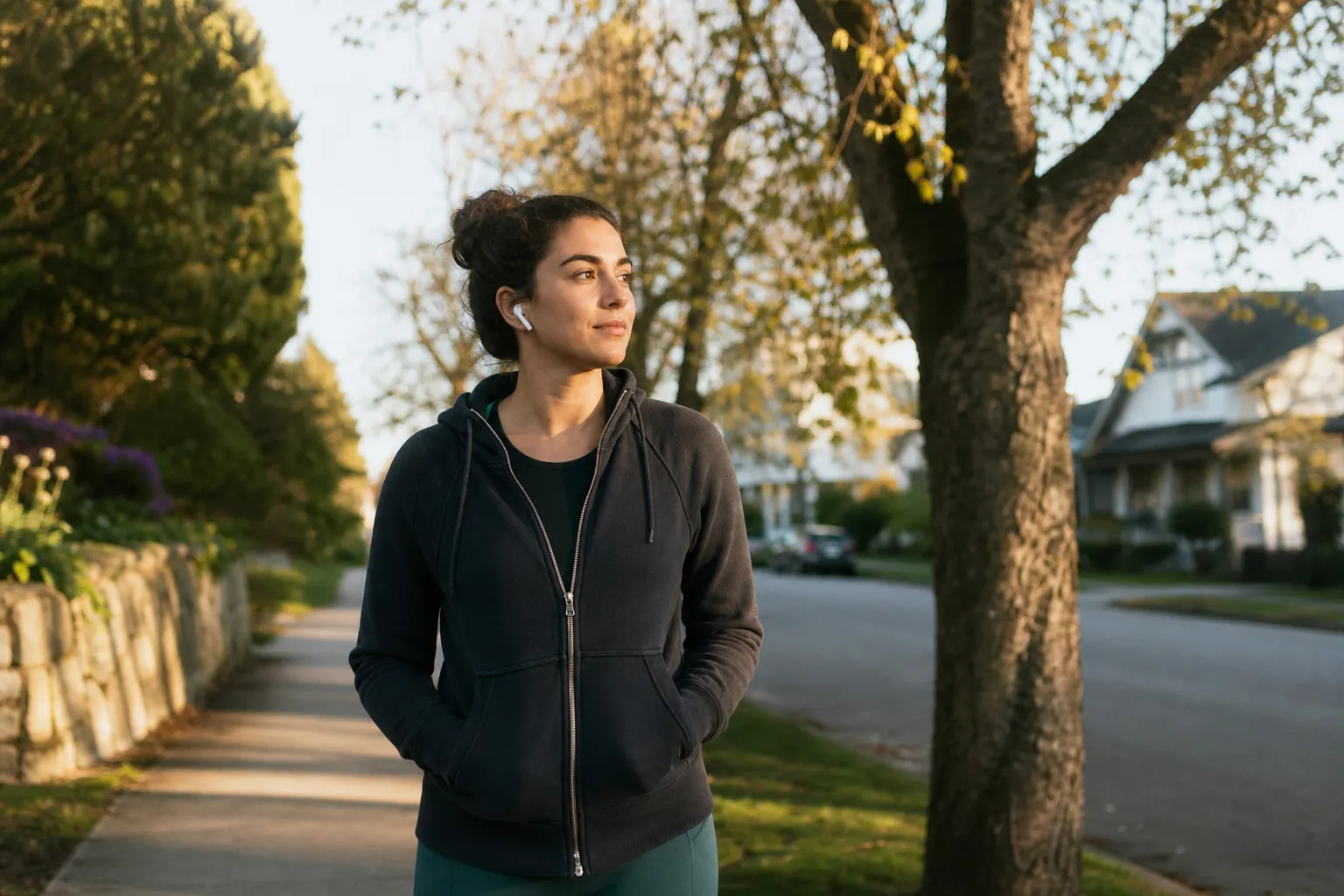
Passive learning
Spanish With a Bilingual Spouse
Living with a bilingual spouse feels like winning the language lottery—until you realize intimacy and impatience share a kitchen. Your partner speaks Spanish effortlessly while you stumble through present tense. The goal is not to turn every dinner into immersion boot camp or guilt them into teacher mode. A calm path respects relationship rhythm: shared listening, agreed boundaries, and Spanish woven into life without scorekeeping.
Why home immersion is complicated
Couples need emotional safety, not constant correction. Switching languages mid-argument rarely helps anyone learn subjunctive.
Your spouse may be tired, not withholding. Teaching after work is labor. Appreciate willingness; do not expect unlimited tutoring.
Sticky notes on the fridge or short texts during the day keep Spanish visible without demanding long conversations when energy is low.
Agreeing on language boundaries
Designate Spanish moments: Saturday breakfast, evening walk, one TV episode. Outside those windows, default to whatever feels natural.
Write informal rules together. Predictability prevents passive resentment on both sides.
Your spouse can reply in Spanish at their natural speed while you read for comprehension first.
Listening together beats drilling each other
Share a short scene or podcast weekly. Pause to ask what a line meant—curiosity, not exam. Your partner explains in context you both just heard.
This frames them as co-viewer, not professor.
Trips to Spanish-speaking family or vacation spots give both of you a calendar reason to listen together before departure.
When your spouse switches to English for you
They may code-switch to include you or speed conflict resolution. Notice without blame. Gently request one repeat in Spanish when calm.
Long-term, your comprehension growth reduces their need to translate everything.
Debrief after travel: which phrases felt easy, which need replay in calm modules at home.
Including family without performance pressure
In-laws and extended family can intimidate beginners. Prepare a few phrases beforehand; sit with partial understanding. Your spouse can narrate quietly later.
Children in the home absorb faster—let their Spanish play coexist with your slower path.
If Spanish practice starts arguments, shrink the goal immediately. Relationship safety outranks immersion ideals every time.
Avoiding fluency comparison in the relationship
They are not your benchmark; they are your life partner. Celebrate your milestones separately: first joke understood, first phone call handled solo.
Comparison poisons both love and learning.
Consider a weekly check-in in English about how the language plan feels—not only practice in Spanish.
Passive input your spouse can support lightly
Ask them to leave voice notes with slow greetings, label pantry items, or pick one playlist for Sunday cooking. Low effort for them; rich input for you.
Gratitude reinforces willingness more than criticism of accent.
When frustration spikes
If Spanish nights feel like failure, shrink the goal: five minutes, one song, one phrase. Repair emotional safety before pushing immersion.
Couples therapy and language learning both honor the truth that communication matters more than metrics.
Raising bilingual kids as the learning parent
Let your spouse lead Spanish depth while you contribute what you can. Kids benefit from your visible learning effort—modeling beats perfection.
Share bedtime stories: they read fluently; you repeat chorus lines.
Long-distance phases and travel
Visits to Spanish-speaking family spike exposure. Prepare with listening before trips; debrief after. Memories anchor vocabulary emotionally.
Video calls with relatives can be short—quality over marathon performances.
Building independence from your partner
Eventually you want Spanish beyond the household. Solo listening, clubs, and travel solo tasks prevent over-reliance on translation at home.
Your spouse will cheer when you understand someone they did not interpret.
Examples
¿Puedes decirlo más despacio?
Can you say it more slowly?
¿Qué significa eso?
What does that mean?
Hablemos español en la cena.
Let's speak Spanish at dinner.
Gracias por ayudarme.
Thank you for helping me.
Todavía estoy aprendiendo.
I am still learning.
FAQ
Should my bilingual spouse only speak Spanish to me?
Only if you both agree and it feels supportive. Forced immersion can strain relationships. Start with bounded Spanish times.
What if they correct me constantly?
Ask for a correction style that fits: end of sentence, written notes, or specific practice slots—not every meal.
Can I learn Spanish mainly through my partner?
Partners accelerate context but should not be your only input. Add graded audio so your ear hears consistent models beyond one accent.
How do we balance English as our couple language?
Many bilingual couples keep English for logistics and Spanish for culture, family, or fun. Design a mix that honors both.
Takeaway
Learning Spanish with a bilingual spouse works when you set gentle boundaries, share listening time, and refuse to turn love into a grading session. Grow independence while appreciating their support.