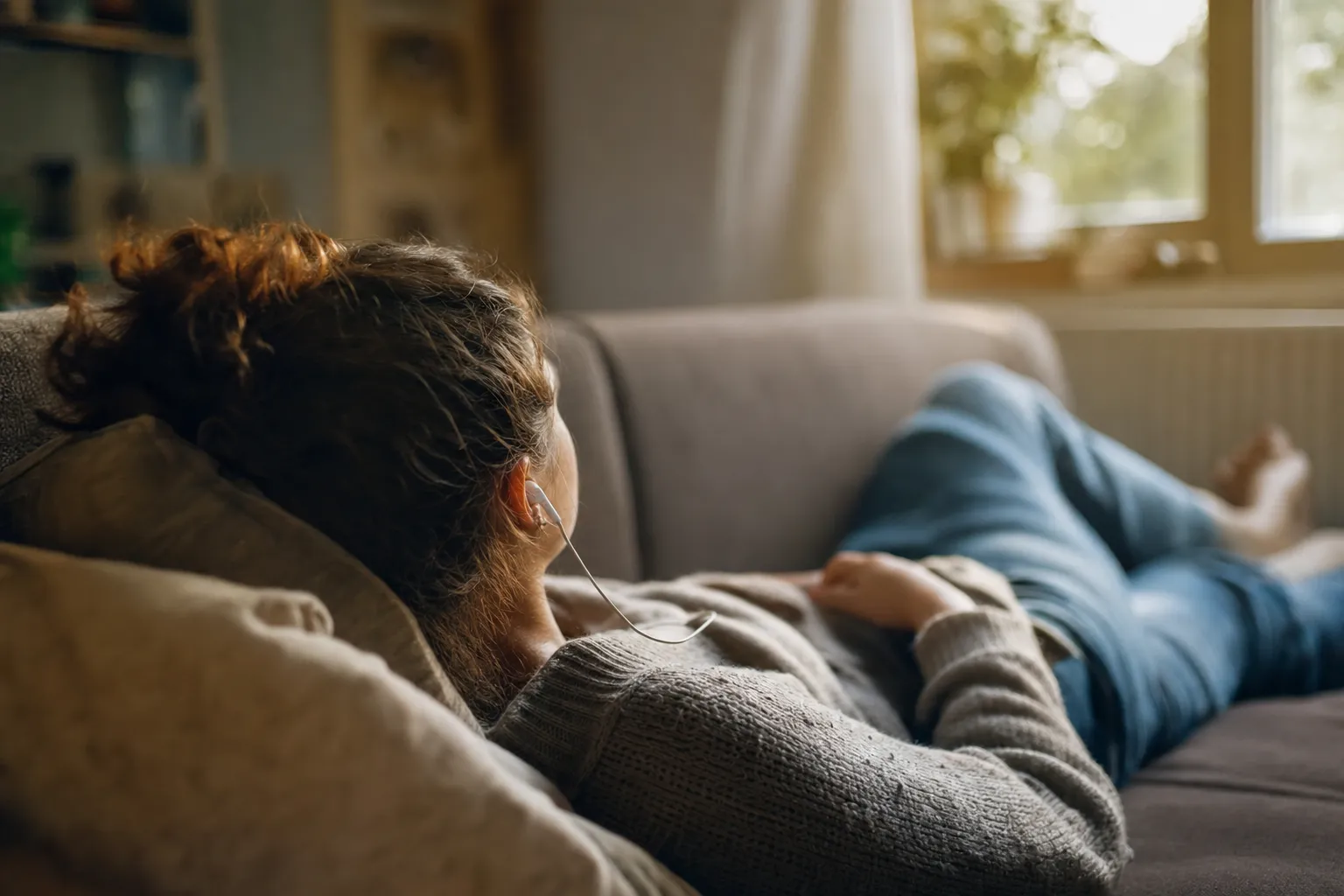
Passive learning
Learn Spanish Passively
Passive Spanish learning is often misunderstood as effortless or magical. It is neither. It is a deliberate choice to lead with listening and reading—to absorb sound, rhythm, and phrase chunks before you worry about perfect speech. For English speakers, that order matches how the brain actually acquires language. You lower the performance pressure, pick formats you can repeat daily, and let comprehension climb while speaking confidence catches up. The goal is not to avoid work; it is to stop fighting your nervous system with shame-based study marathons.
Passive does not mean zero effort
You still show up. You still select material at the right level. Passive means the primary mode is reception: ears and eyes on Spanish you mostly understand, with production optional until it feels natural.
Think of it as training your internal radio to tune to Spanish. Early on, the signal is fuzzy. Consistent input sharpens it—without requiring you to perform on demand.
Why input-first suits English speakers
English and Spanish share some vocabulary but differ sharply in sound system and rhythm. Jumping straight to conversation often triggers anxiety and fossilized mistakes. Listening builds the phonetic map your mouth will later use.
When you have heard ¿Cómo estás? and Estoy bien hundreds of times in context, producing them costs less cognitive load than assembling words from a chart.
Formats that actually sustain a passive habit
Graded scenes with image and text, beginner podcasts with clear hosts, and re-watched episodes with Spanish captions you mostly follow. Each format shares one trait: you grasp the message without constant dictionary lookups.
Rotate formats slowly. One week of the same Slapp module or podcast episode often beats seven unrelated clips. Familiarity is fuel.
- Short audio scenes with visible text
- Beginner podcasts at conversational speed
- Shows you know, with Spanish audio or subs
- Music with lyrics you can read along
Building a passive daily loop
Anchor Spanish to an existing cue: after brushing teeth, when the kettle boils, or when you sit on the train. Same cue, same short block, same content for several days. Habit science beats motivation speeches.
Keep a floor, not a ceiling. Five minutes counts. On good days you may listen longer; on hard days, the floor protects the streak of showing up without punishing misses.
Common passive-learning mistakes
Playing native radio all day while understanding ten percent—your brain tunes out. Consuming only with subtitles in English, so Spanish never becomes the carrier of meaning. Believing passive input never needs repetition.
Another mistake: comparing your silent progress to someone who practices speaking daily. Different lanes, different timelines. Comprehension-first is a valid strategy, not a consolation prize.
Signs passive practice is working
You catch phrases without translating. Unknown words bother you less because context carries you. You laugh at a joke in Spanish before you read the subtitle. These signals mean your ear is organizing the language.
Speaking will feel clumsy at first even when listening improves—that is the normal gap. Celebrate comprehension wins; speech follows.
Slapp as a passive practice home base
Slapp is built around repeat-friendly scenes: visual context, aligned text, calm audio. No timer pressure, no public failure. Replay the same module across days—the app expects repetition, not one-and-done consumption.
Building a two-week passive experiment
Week one: choose one Slapp module or ninety-second clip. Listen with text Monday, without text Tuesday, with text Wednesday. Note one phrase that surprised you—not ten.
Week two: same clip plus one beginner podcast segment you already heard once. By day fourteen, compare day-one comprehension to day-fourteen. Most learners report a clear jump when repetition stayed constant.
If week two feels easy, that is graduation—not boredom. Swap one new clip into the rotation while keeping one “old friend” clip for review. Passive pipelines need anchors.
Passive input while parenting or caregiving
Parents often have ninety-second windows, not ninety-minute blocks. Passive Spanish fits nap-time listening with headphones or kitchen scenes while bottles warm. The bar is one replay, not a chapter.
Kids absorb from your calm consistency more than from quizzes. If they hear you listening to Spanish softly, you model learning without performance anxiety.
When family asks why you are not speaking yet
Explain that your ear is still mapping sounds—a phase, not procrastination. Comprehension-first paths look quiet from outside until suddenly you handle a phone call.
Invite them to listen to one scene with you. Shared audio ends the debate better than defending methodology.
Passive does not mean absent
Background noise you ignore teaches almost nothing useful. Passive learning still needs one attentive pass where you follow meaning—picture, subtitle, or transcript—before the same audio loops while you cook or fold clothes.
Think of attention as a deposit and repetition as interest compounding quietly. Five focused minutes plus replays through the week beat an hour of muffled chatter you never tracked and eventually tuned out entirely.
Slapp scenes work here because they are short, visual, and repeatable. One clear watch with eyes on the scene, then let the audio ride along during low-focus tasks without demanding perfect concentration.
Balance input weeks with tiny output
Ears can outpace your mouth for a long time without anything being wrong. Once a week, shadow three lines or say them from memory so listening stays connected to speech instead of becoming a separate hobby.
Whisper if roommates are near or you are on public transit. The point is mouth movement and rhythm, not performance quality or impressing anyone within earshot.
Passive stacks with gentle output feel sustainable for years of adult life. All-input forever can make conversation day feel like a cliff you never trained for.
- First pass: eyes on meaning
- Later passes: hands busy, audio on
- Weekly: three lines aloud
Examples
Hoy solo voy a escuchar.
Today I am only going to listen.
¿Puedes repetir eso?
Can you repeat that?
Entiendo la idea general.
I understand the general idea.
Todavía no hablo mucho.
I don't speak much yet.
Me gusta aprender con audio.
I like learning with audio.
FAQ
Is passive learning enough to become fluent?
Passive input is the foundation; most learners eventually add speaking practice. But a long input phase prevents many early mistakes and builds confidence. Fluency is a spectrum—passive work moves you along it.
Should I take notes while listening?
Light notes are fine—one phrase per session. Heavy note-taking can pull you into study mode and break flow. If notes stress you, drop them and repeat the audio instead.
Can I learn passively while doing other tasks?
Yes for review material you already know. Brand-new content needs more attention. Driving and complex chores are better for familiar modules than for first exposure.
Takeaway
Passive Spanish is input-first, low-pressure, and repeatable. Choose understandable scenes, replay them calmly, and let your ear do the heavy lifting before you demand perfect speech. Attend once, repeat often, speak a little. That is passive learning done honestly.