Culture
Spanish Tapas Culture
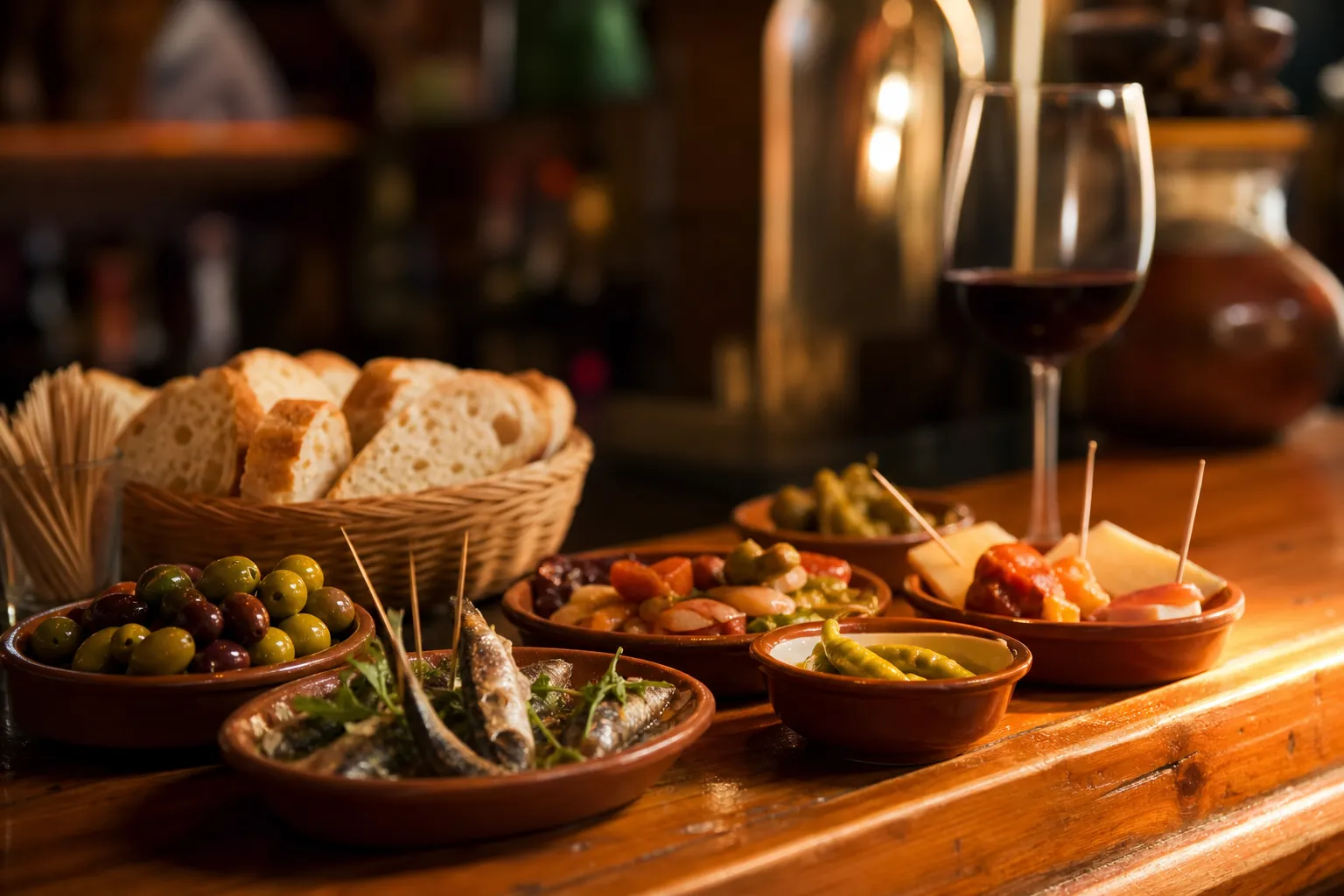
Tapas culture in Spain is less about food size than social rhythm: small plates, standing at bars, sharing with friends, and eating later than many English-speaking tourists expect. You do not need to master fifty dishes—you need phrases for ordering, asking recommendations, splitting bills, and joining the unhurried evening flow. Tourists who rush dinner at six pm miss the scene; those who adapt discover language practice in every crowded bar. Politeness is casual but present: greet the bartender, do not wave money rudely, and say gracias when plates arrive. Standing at the bar is participation, not punishment. Watch locals for five minutes before ordering—pace and gestures teach as much as menus.
What tapas are—and are not
Tapas can be free nibbles in some towns, paid small plates elsewhere, or pintxos on bread in the Basque Country. Ask locally; assumptions embarrass no one if asked kindly.
Bar etiquette English speakers miss
Stand at the bar if locals stand. Do not expect US-style service pacing. Order at the bar, point if needed, keep personal space tight but friendly.
Phrases for ordering and recommending
¿Qué me recomienda?, Una caña (small beer), Para picar (something to nibble), ¿Cuánto es?, La cuenta, por favor.
- Una caña — small draft beer
- Para picar — to snack/share
- Ración — larger plate
- ¿La cuenta? — the bill
Timing and meal rhythm
Lunch main, dinner late. Tapas bridge hunger between work and midnight conversations. Plan sightseeing mornings if you want midnight energy.
Regional tapas vocabulary
Andalusia: tapas tradition strong. Basque Country: pintxos. Galicia: seafood vocabulary spikes. Listen locally.
Tourist mistakes at tapas bars
Eating only paella at tourist traps. Ordering giant entrees when locals share plates. Ignoring greetings to staff.
Practice before your trip
Slapp restaurant and Spain situation modules rehearse audio before the noisy bar environment scrambles your ear.
Navigating crowded tapas bars
Watch payment flow: some bars tab by chalk on counter. Ask ¿Pagamos aquí? if unsure.
Point at displayed plates if language fails—gesture plus por favor still polite.
Evening peak 9–11 pm: expect noise. Lean in, repeat order, smile—volume is environmental not personal anger.
Raciones versus tapas sizing
Ordering ración shares larger plate among friends. Ask staff size if hungry—better than ordering three unknown tapas blindly.
Sobremesa conversation time
Lingering after food with coffee and talk is cultural. Rush payment signals tourist stress, not disrespect—but you miss practice.
Allergies and dietary Spanish
Soy celíaco, Sin gluten, Sin lactosa—write allergies on paper if stress makes you forget. Kitchen staff appreciate clarity.
Tapas bars move fast; prepare one sentence card if needed. Health beats sounding fluent.
Bar rhythm in Andalusia and beyond
In many Spanish bars you stand where locals stand, greet the bartender, and order at the counter. Service pacing is social—not the rapid turn-taking of a US fast-casual line. A minute of eye contact and buenas tardes comes before the menu.
Tapas, raciones, and pintxos differ by city. Seville might set a small plate with your caña; San Sebastián lines pintxos on the bar for you to point. Ask ¿Es para compartir? if you are hungry and unsure of portion size.
Jamón, aceitunas, and croquetas repeat on chalkboards, but the culture is standing conversation with food—not a seated tasting menu. Learn dos cañas y algo para picar and you can join the evening without memorizing fifty dish names.
Late dinner logistics for travelers
Reservations near 9:30 pm are common in Madrid and Barcelona; starving at six fights local clocks, not your Spanish. Menú del día at lunch saves money and gives you ordering practice when kitchens are fully awake.
Terraza culture means tables spill onto sidewalks in warm months. Pregunto si tienen mesa en la terraza is useful May through September. Shade and a slow caña are part of the plan, not a delay.
Splitting the bill varies: some groups pay rounds; others settle at the end. ¿Separamos la cuenta? avoids awkward silence. Tipping is modest compared to North America—a little change for good service suffices.
Examples
¿Qué me recomienda?
What do you recommend?
Una caña, por favor.
A small beer, please.
Para picar, algo típico.
Something typical to snack on.
La cuenta, por favor.
The check, please.
Está riquísimo.
It is delicious.
FAQ
Are tapas free in Spain?
Sometimes in select regions/bars—not universal. Ask or observe locals paying.
Do I need reservations?
Popular pintxo bars may need timing strategy; casual stand bars often do not.
Vegetarian tapas?
Ask sin carne or vegetarian options—patatas bravas, pimientos, salads vary by bar.
Takeaway
Tapas are social Spanish practice with food. Learn ordering phrases, eat later, stand where locals stand, and let the bar teach you listening. Tapas are evening social rhythm—learn bar phrases, eat late, and stand where the locals stand.