Passive learning
Spanish for Teachers on Breaks
Teachers spend vocal energy all day—adding Spanish after school feels like another performance. Yet educators excel at scaffolding, routine, and celebrating small wins. Spanish on breaks means bell-to-bell boundaries: listen during planning period, recess duty earbuds, or Saturday coffee—not another evening of homework you assign yourself.
Teacher schedules are fragmented by design
Use fragments intentionally. One scene per planning period three days weekly beats abandoned hour blocks.
Bell schedules become cues: after second period, headphones on.
Pick one listening resource for June, one for July. Teachers plan for others all year—keep Spanish planning embarrassingly simple.
September maintenance can be five minutes daily again—August does not need to preview September pressure.
Summer as ramp, school year as maintenance
Summer builds listening hours. School year sustains five-minute floors during September chaos.
Accept seasonal rhythm without shame.
Read for pleasure in Spanish children’s books if that delights you; joy counts.
Single monthly lunch with another teacher learning Spanish creates belonging without another weekly obligation.
Recess and duty listening
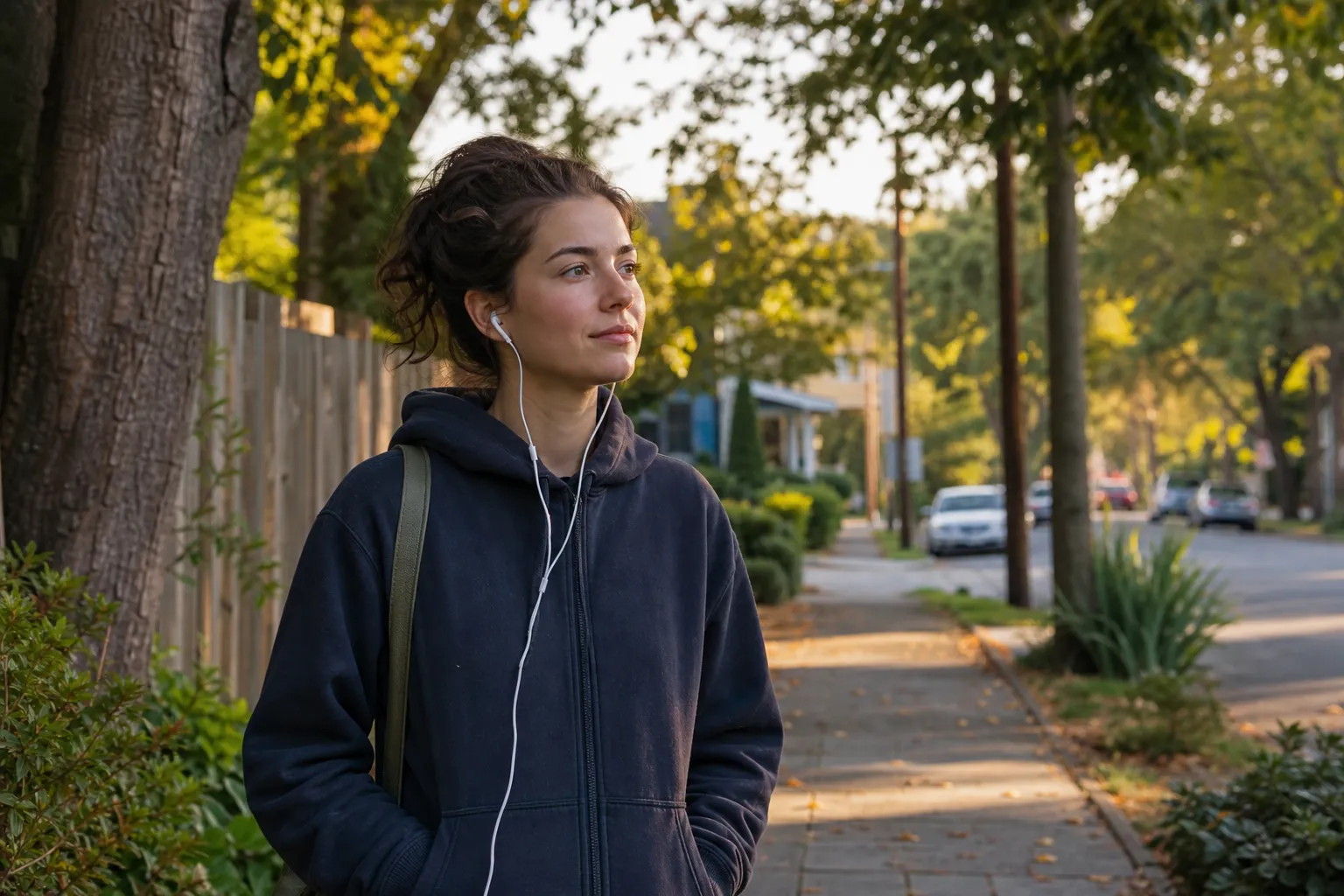
Walk perimeter with familiar podcast. Safety vigilance limits new content—review only.
Model lifelong learning for students who spot your earbuds.
If you use classroom Spanish, rehearse lines with audio before school year starts. Familiar phrases reduce live improvisation stress.
Shared five-minute scene at lunch beats isolated guilt when school year roars back.
Avoiding teacher perfectionism
You grade papers; Spanish is not another stack to mark red. Input without rubric.
Mistakes prove learning is human—share process with students optionally.
Students benefit seeing you learn alongside them when appropriate.
Keep one scene or podcast you actually enjoy—not the one algorithms rank highest. Enjoyment predicts whether Spanish survives your next busy month when motivation dips.
Classroom Spanish for educators
Some teachers want classroom commands for students. Learn listen, sit, repeat from audio used with kids if applicable.
Separate personal acquisition from professional phrases to reduce overwhelm.
After teaching all day, prefer listening over conversation practice. Voice rest is professional care, not laziness.
When comparison or shame appears, shrink the goal until it fits: one listen, one phrase noticed, one calm breath before speaking. Acquisition rewards returns without punishment, not heroics that end in three-week avoidance.
Professional development overlap
Bilingual certification may motivate. Align listening habit with credential timeline if pursuing.
Not every teacher needs credential—travel and family motives suffice.
Weekend speaking practice can wait until Saturday coffee.
Months from now, you will understand more than today if the habit stays kind. Protect kindness first; vocabulary and confidence follow repetition you can live with across real weeks.
Colleague study groups in lounge
Three teachers, one Bluetooth speaker, five-minute scene at lunch Friday. Low prep, high morale.
Rotate who picks audio to share discovery.
June pick one podcast; July pick one story. Teachers plan enough for others—Spanish summer should feel like break.
Parent-teacher conference Spanish
School communities increasingly need Spanish for family contact. Learn greeting and scheduling phrases first.
Interpreter policies still apply for complex conferences.
Break tone prevents resentment toward hobby.
Energy management after talking all day
Prefer listening over speaking practice on workdays. Save conversation for weekends or tutors.
Voice rest is professional necessity.
One lunch monthly with colleague learning Spanish. Shared five-minute scene beats isolated guilt.
Winter break and spring break bursts
Use breaks for deeper immersion—shows, short trips, longer modules. Return to school-year floor afterward.
Bursts plus maintenance beat constant guilt.
Community reduces dropout after September chaos returns.
Retirement transition for teachers
Career-end teachers often travel or volunteer. Spanish started on breaks becomes retirement gift.
Ten years of five-minute habits accumulate.
Listen on the porch because it feels good, not because you owe yourself curriculum. Teachers give structured learning to others all year; Spanish off-season can be unstructured joy.
- Replay familiar audio on hard days
- Celebrate comprehension before eloquence
- Return without guilt after missed days
- Let speaking follow secure listening
Examples
Escucho en el recreo.
I listen at recess.
Cinco minutos entre clases.
Five minutes between classes.
Repito la misma lección.
I repeat the same lesson.
Aprendo a mi ritmo.
I learn at my pace.
Los veranos escucho más.
In summers I listen more.
FAQ
When can teachers fit Spanish practice?
Planning periods, commutes, recess duties with review audio, and summer breaks. Avoid late-night sessions when possible.
Should teachers learn classroom Spanish or conversational Spanish?
Depends on goals. Many start conversational for travel and family, then add classroom phrases if needed.
How do teachers avoid burnout with another goal?
Keep school-year goals tiny. Use summers for optional depth. No self-graded homework.
Can students and teachers learn together?
Some schools run clubs. Ensure boundaries remain clear and your learning is not unpaid labor.
Takeaway
Teachers fit Spanish into bell schedules and breaks—short listening during planning, review audio on duty, deeper practice in summer. Treat it as professional renewal, not another pile to grade.