Culture
New Year Phrases in Spanish
New Year’s Eve Spanish combines universal wishes with quirky traditions—especially Spain’s twelve grapes at midnight, one per bell strike. Latin American countries add their own rituals: lentils for prosperity, suitcase walks for travel, color underwear superstitions. English learners can enjoy seasonal phrases without mastering every local custom. Core messages: Feliz Año Nuevo, salud y prosperidad, que se cumplan tus deseos. Listen to countdown broadcasts for adrenaline-filled comprehension practice. Stay polite at parties: greet hosts, thank for invite, avoid joking about serious superstitions. Countdown nights are loud listening labs—predict números before speakers shout them. Fun stress still counts as practice. Draft one Feliz Año Nuevo text before midnight so thumbs type calmly instead of panicking in crowds.
Essential wishes
Feliz Año Nuevo, Próspero Año, Feliz 2026 (update yearly in speech), Mucha salud y felicidad.
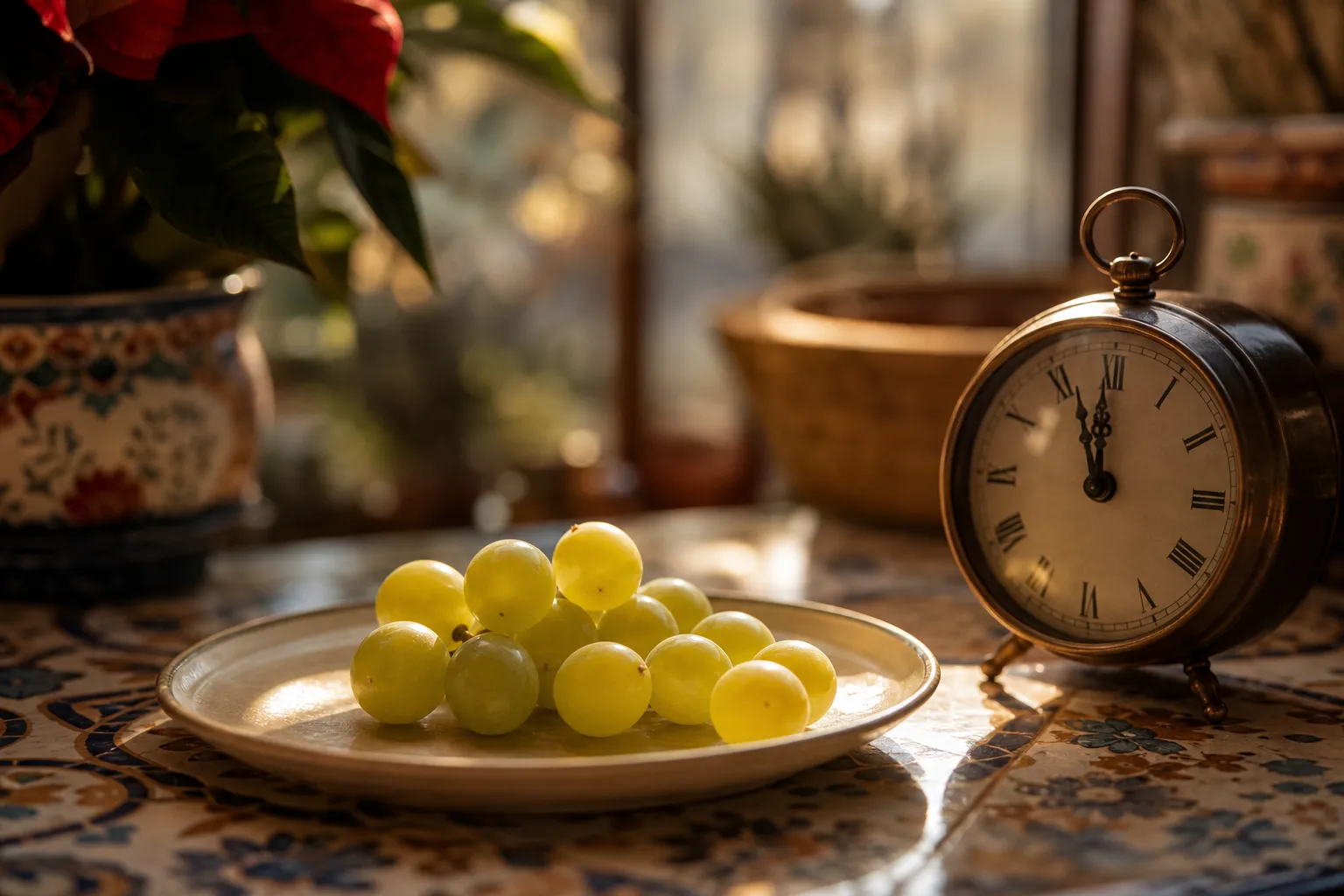
Spain’s twelve grapes ritual
Doce uvas at midnight—harder than it sounds. Vocabulary: campanadas, uvas, suerte, brindis.
Latin American New Year customs
Lentils, fireworks, yellow underwear for luck—regions differ. Observe, ask kindly, participate if invited.
- Feliz Año Nuevo — Happy New Year
- Brindis — toast
- Propósitos — resolutions
- Campanadas — chimes
Party phrases
¿Cómo pasaste el año?, Nos vemos el próximo año, Gracias por invitarme.
Resolution talk for learners
Este año quiero mejorar mi español—locals cheer language goals. Ask theirs: ¿Cuál es tu propósito?
Tourist logistics
Nochevieja transport packed; reserve early. Cerrado hasta enero—January hours shift.
Post-holiday January Spanish
Reyes Magos (Spain) extends season to January 6—more vocabulary, more listening chances.
Countdown vocabulary under noise
Practice números 1–12 aloud before grape rituals. Crowd noise drowns careful listeners.
Learn felicidades and abrazo vocabulary for midnight hugs—physical culture part of phrase practice.
January follow-up messages revive contacts: ¿Cómo empezó el año?
Latin American luck rituals vocabulary
Lentils, suitcases, yellow underwear—learn words as cultural curiosity, not mockery.
Fireworks safety phrases
Cuidado, apartaos—crowded plazas need situational Spanish beyond toasts.
January follow-up messages
¿Cómo empezó el año? revives contacts kindly. Short messages beat long resolutions nobody reads.
Propósito de aprender español—share yours; locals often cheer language goals.
Twelve grapes and countdown noise
Spain’s campanadas at Puerta del Sol made twelve grapes at midnight famous—one per bell strike, harder than it looks in a laughing crowd. Practice números uno through doce before the chaos.
Latin countries add lentils for prosperity, suitcase walks around the block for travel, and colored underwear traditions whose details vary by grandmother. Ask locals what they do; do not assume one meme fits all.
Feliz Año Nuevo and que tengas un buen año work January first through mid-month. Combine with health wishes—salud y trabajo—when speaking to adults you respect.
January follow-ups
¿Cómo empezó el año? revives contacts kindly after the holiday rush. Propósito de aprender español often earns encouragement rather than eye rolls—people like supporting sincere goals.
Enero can feel quiet in southern Europe; many shops reopen slowly. ¿Cuándo vuelven a abrir? saves a wasted walk. Use the lull for listening practice, not guilt about missed parties.
Fireworks vocabulary—petardo, fuegos artificiales—helps you read city announcements about bans and safety zones. Follow local rules; your ears and phrases last longer than one loud night.
Fireworks vocabulary for crowded plazas
Cuidado, apartaos, salida—safety words matter when thousands squeeze into midnight squares. Learn them before fun vocabulary.
Examples
Feliz Año Nuevo.
Happy New Year.
¡Salud y prosperidad!
Health and prosperity!
Mis propósitos de año nuevo.
My New Year resolutions.
¡Una uva por campanada!
One grape per chime!
FAQ
Feliz Año Nuevo when exactly?
After midnight Dec 31–Jan 1, and throughout early January.
Must I eat twelve grapes?
Optional fun in Spain—try if invited; laugh when you choke on grape six.
Professional email?
Feliz Año Nuevo / Próspero Año in January messages is warm and normal.
Takeaway
Learn New Year wishes and toast vocabulary. Traditions differ by country—listen, participate respectfully, and enjoy seasonal Spanish audio. New Year wishes are high-frequency in January messages—draft one bilingual text now to send practice into real relationships. January messages are perfect low-stakes writing practice. New Year Spanish mixes wishes with local rituals—observe, participate when invited, and practice numbers before midnight. Save your message as a draft in December—midnight crowds are no place to hunt for vocabulary.