Passive learning
Mumble Shadowing in Spanish
Mumble shadowing is shadowing turned down to nearly zero volume—lips, jaw, and tongue follow the speaker while your voice stays a breath. For Spanish learners it removes the performance anxiety that makes full-voice repetition stiff and short-lived. You still train timing, linking, and mouth shapes; you simply skip the inner critic that listens for native accent. English speakers often need this middle step because we treat audible speaking as the only real practice. Mumble shadowing proves your mouth can learn in private before it shares anything in public.
Why mumbling counts as real practice
Motor patterns for Spanish rhythm live in movement, not volume. Your articulators learn the path from sound to sound whether anyone hears you or not.
Athletes drill slow motion without stadium noise. Mumble shadowing is the language equivalent—form before spotlight.
Mumble versus silent shadowing
Silent shadowing moves lips with no breath. Mumble shadowing adds minimal voiced airflow so you feel vibration in chest and face. That tiny vibration helps some learners notice stress and length.
If mumble still feels exposing, alternate silent passes on the bus and mumble passes at home.
Best audio for mumble shadowing
Clear single-speaker lines work best: podcast intros, dubbed scene dialogue, language-lesson pauses. Crowded group banter is hard to mumble-track at first.
Slightly slower than native speed is fine. You are training shape, not proving speed yet.
Physical setup that helps
Stand or walk if sitting makes you tense. Loosen jaw before starting. Spanish needs a lower, more relaxed mouth than crisp English consonants.
Phone at chest height if you watch video—neck tension distorts vowels.
- Relax shoulders before play
- One speaker, one phrase family
- Eyes optional after first pass
- Thirty seconds counts
How long to mumble each day
Two to four minutes of the same thirty-second clip is plenty. Repetition depth beats clip variety.
End before your jaw aches. Tension trains the wrong muscle memory.
Pairing mumble shadowing with listening
Listen once for meaning. Mumble shadow twice. Listen once more without moving lips. That sandwich locks comprehension outside in and rhythm inside out.
When mumble shadowing feels pointless
If you never graduate to whisper after two weeks on the same material, the audio may be too hard or too boring. Switch to a scene you care about slightly more.
Pointlessness also appears when you multitask heavily. Mumble shadowing needs light attention—not full focus, but not zero.
Common mistakes
Mumbling so quietly you stop moving lips. Chasing every word in fast dialogue. Switching clips daily. Judging accent instead of timing.
Graduating from mumble to whisper
When you anticipate the next line in a familiar clip, add whisper volume for one pass only. If tension returns, drop back to mumble without shame.
Mumble shadowing on the move
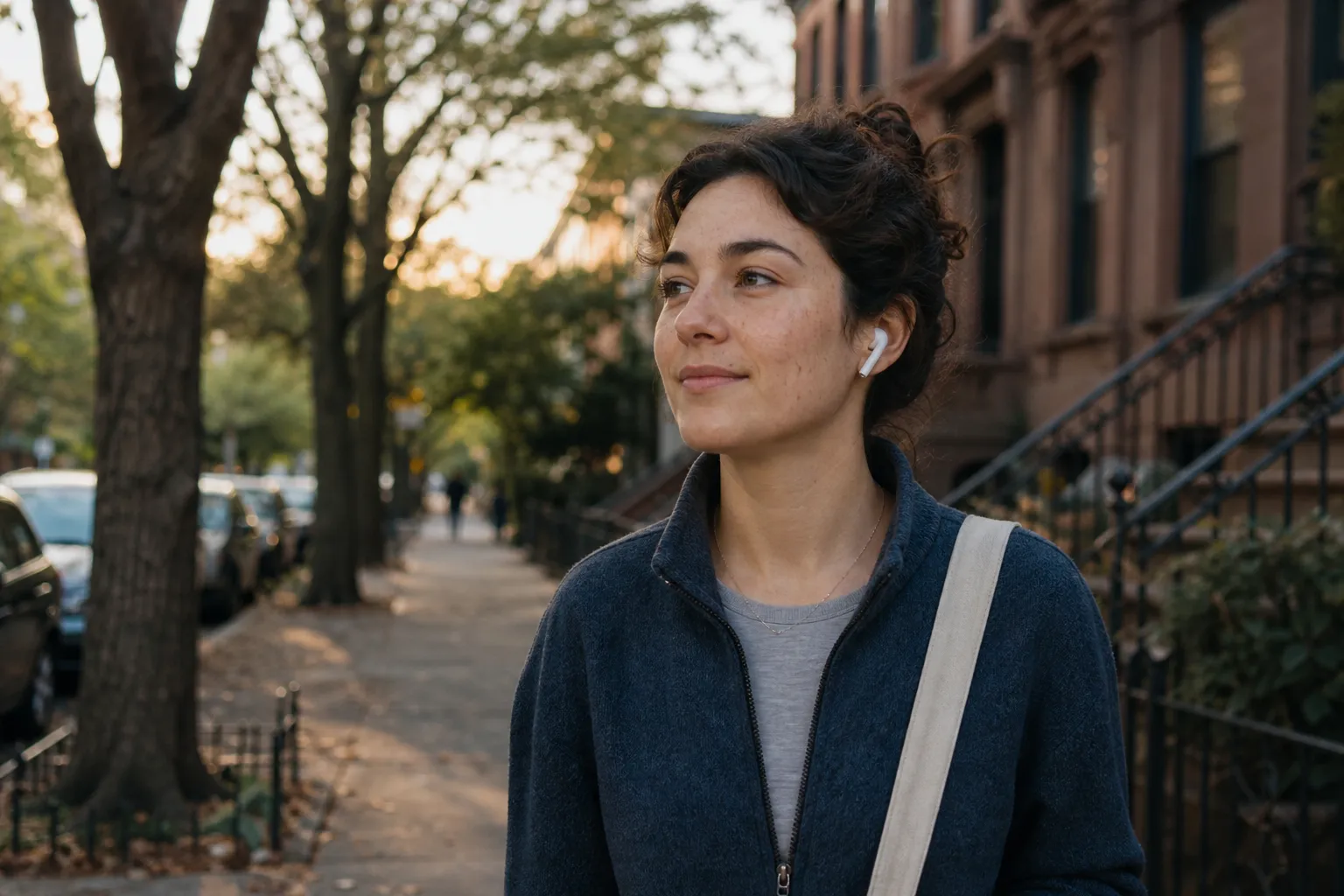
Walking with earbuds is ideal—your body already in rhythm. Avoid mumble shadowing where people need quiet; use silent tier instead.
Slapp scenes as mumble laboratories
Repeatable visual scenes give you a face to watch while you mumble—lip cues without needing to look native yourself. Same module five days in a row is the point.
Building a mumble shadow habit that sticks
Anchor mumble shadowing to a cue you already have—after brushing teeth, during the first coffee sip, or while the kettle boils. Cue stacking turns a technique into furniture in your week instead of another task you forget by Wednesday.
Keep a three-line log on your phone: date, clip title, one word that felt smoother. The log is not grading; it is proof that quiet mouth work happened when motivation was low.
Examples
Murmuro con el podcast.
I mumble along with the podcast.
Nadie me escucha y está bien.
Nobody hears me and that is fine.
Los labios siguen el ritmo.
My lips follow the rhythm.
Otra vez, misma frase.
Again, same sentence.
Sin presión, solo movimiento.
No pressure, just movement.
FAQ
Can mumble shadowing replace speaking practice?
It replaces high-pressure speaking practice early on. Real conversations still matter later—but mumble builds the runway.
Will I develop bad habits mumbling?
On comprehensible input with varied clips over time, habits self-correct when you add whisper and real speech. Isolated mumbling on one clip too long is the risk—rotate slowly.
Is it weird to mumble in public?
Use silent tier in public; mumble at home or on walks. Nobody needs to know your practice tier.
How is this different from lip-syncing songs?
Same mechanic, different goal—Spanish speech rhythm for conversation, not stage performance.
Takeaway
Mumble shadowing lets your mouth learn Spanish melody without an audience. Stay quiet, stay repetitive, and let volume rise only when movement feels easy. Treat mumble shadowing like floss—brief, private, and non-negotiable on easy days so hard days still have a runway when speaking pressure arrives.