culture
A1Spanish phrases for Spanish in the Dominican Republic
Try Dominican Spanish expressions. Understanding local customs and regional words helps you sound respectful and curious — not just translated.
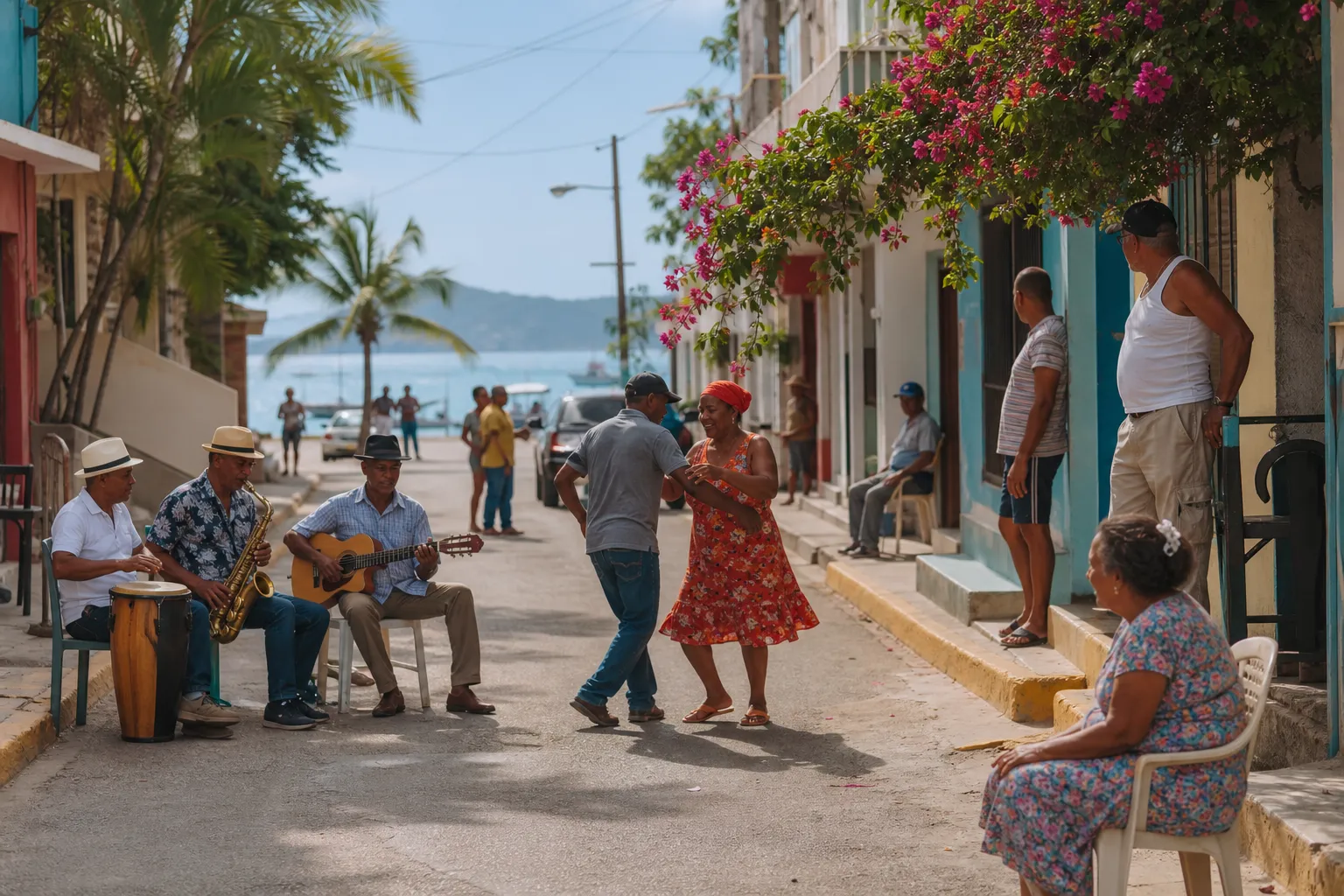
This guide to Spanish in the Dominican Republic is for beginners learning Spanish for local customs and regional speech. Before you travel or make friends abroad, it helps to know how people greet, eat, tip, and celebrate. This situation explains the phrases that signal you are paying attention to local habits.
These lines stay at beginner level on purpose. You do not need subjunctive or complex grammar to be polite and understood in this setting. Numbers, times, and place names are worth rehearsing separately. When those pieces are solid, the phrases in this situation snap into place much faster.
You will hear lines such as "¿Qué lo qué?", "Tato", and "Dime a ver" in real settings. They are short on purpose: easy to memorize, easy to adapt, and polite enough for strangers and staff alike.
Do not memorize all fifteen at once. Pick the three you need most, master them in Slapp, then add more. Spaced repetition beats cramming for travel and daily life Spanish. Slapp is built for calm repetition — hear the phrase, speak it back, move on. By the time you are in the real situation, the words will already live in muscle memory.
Browse all fifteen phrases for spanish in the dominican republic below — each with Spanish, English, and Slapp practice when available. Focus on cultural context and regional Spanish vocabulary you will reuse in nearby situations too.
15 A1 phrases for this scene
Phrase 1
Phrase 2
Phrase 3
Phrase 4
Phrase 5
Phrase 6
Phrase 7
Phrase 8
Phrase 9
Phrase 10
Phrase 11
Phrase 12
Phrase 13
Phrase 14
Phrase 15
The Slapp 5× repeat method
Don't cram. Let your brain collect the pattern in the background.
- 1Listen to the phrase audio once without pressure
- 2Read the Spanish and English together
- 3Replay tomorrow — same phrase, fresh context
- 4Repeat on day 3, day 5, and day 7
- 5Move on when it sounds obvious