culture
A1Spanish phrases for Spanish in Costa Rica
Learn friendly Costa Rican expressions. Understanding local customs and regional words helps you sound respectful and curious — not just translated.
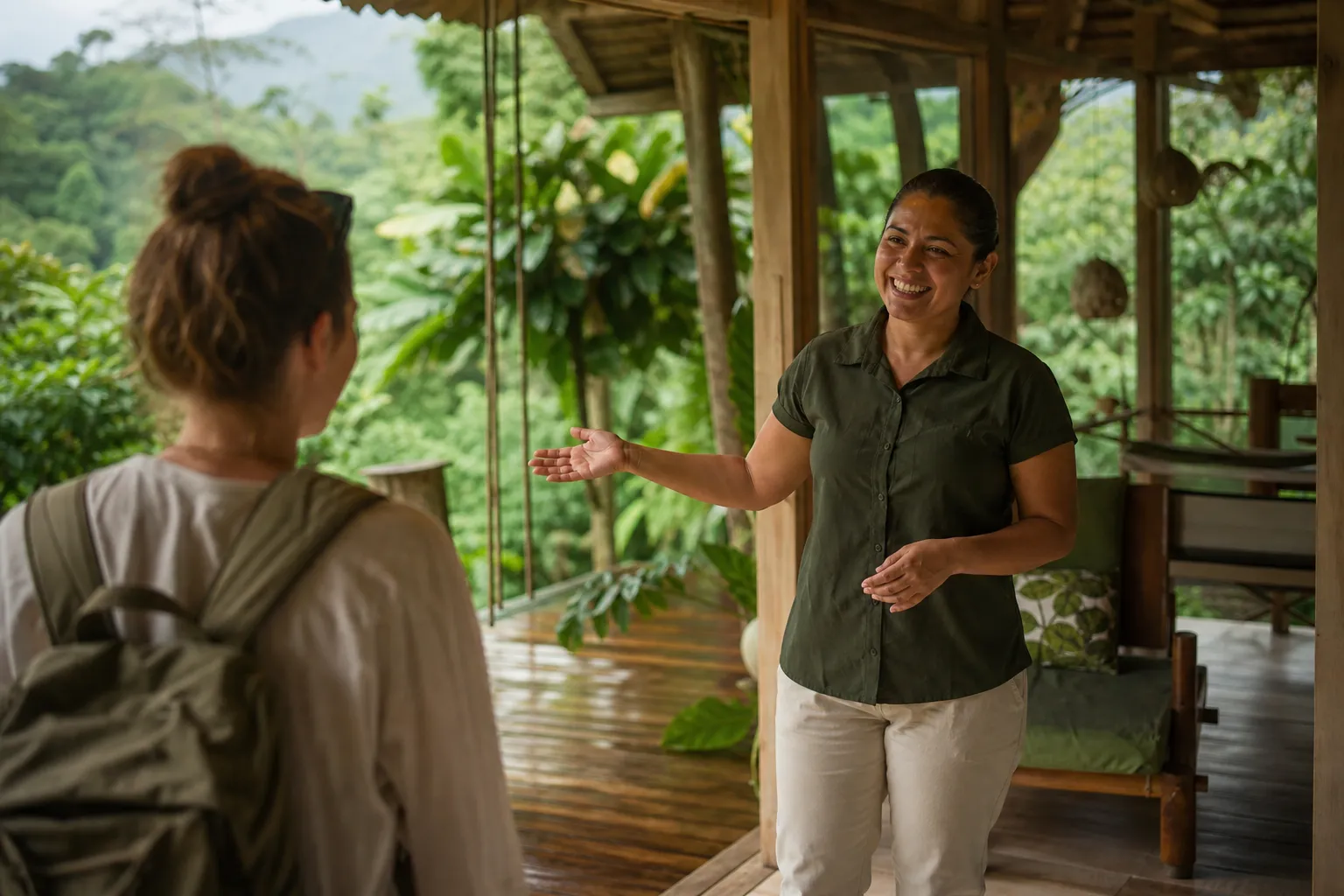
This guide to Spanish in Costa Rica is for beginners learning Spanish for local customs and regional speech. Spanish changes by country, city, and generation. These phrases introduce regional expressions, greeting customs, meal times, and the social rules that textbooks often skip.
Everything here is A1 level — present tense, common words, no jargon. If a phrase feels long, break it into two breaths when you speak. Expect short answers: a price, a direction, a time, or a yes/no. Your job is to ask clearly and confirm what you heard. Repeating the last word as a question often works surprisingly well.
Start with essentials like "Pura vida" and "¿Qué tuanis?" — then add "Tico" when you need to go deeper. Each line below is chosen for spanish in costa rica and matches what native speakers actually say.
Pair each Spanish line with the English gloss until meaning is instant. Then hide the English and test yourself — that is when phrases become usable in real time. Open Slapp before your trip or appointment, run through the situation deck twice, and you will notice how much calmer the real conversation feels.
Browse all fifteen phrases for spanish in costa rica below — each with Spanish, English, and Slapp practice when available. Focus on cultural context and regional Spanish vocabulary you will reuse in nearby situations too.
15 A1 phrases for this scene
Phrase 1
Phrase 2
Phrase 3
Phrase 4
Phrase 5
Phrase 6
Phrase 7
Phrase 8
Phrase 9
Phrase 10
Phrase 11
Phrase 12
Phrase 13
Phrase 14
Phrase 15
The Slapp 5× repeat method
Don't cram. Let your brain collect the pattern in the background.
- 1Listen to the phrase audio once without pressure
- 2Read the Spanish and English together
- 3Replay tomorrow — same phrase, fresh context
- 4Repeat on day 3, day 5, and day 7
- 5Move on when it sounds obvious