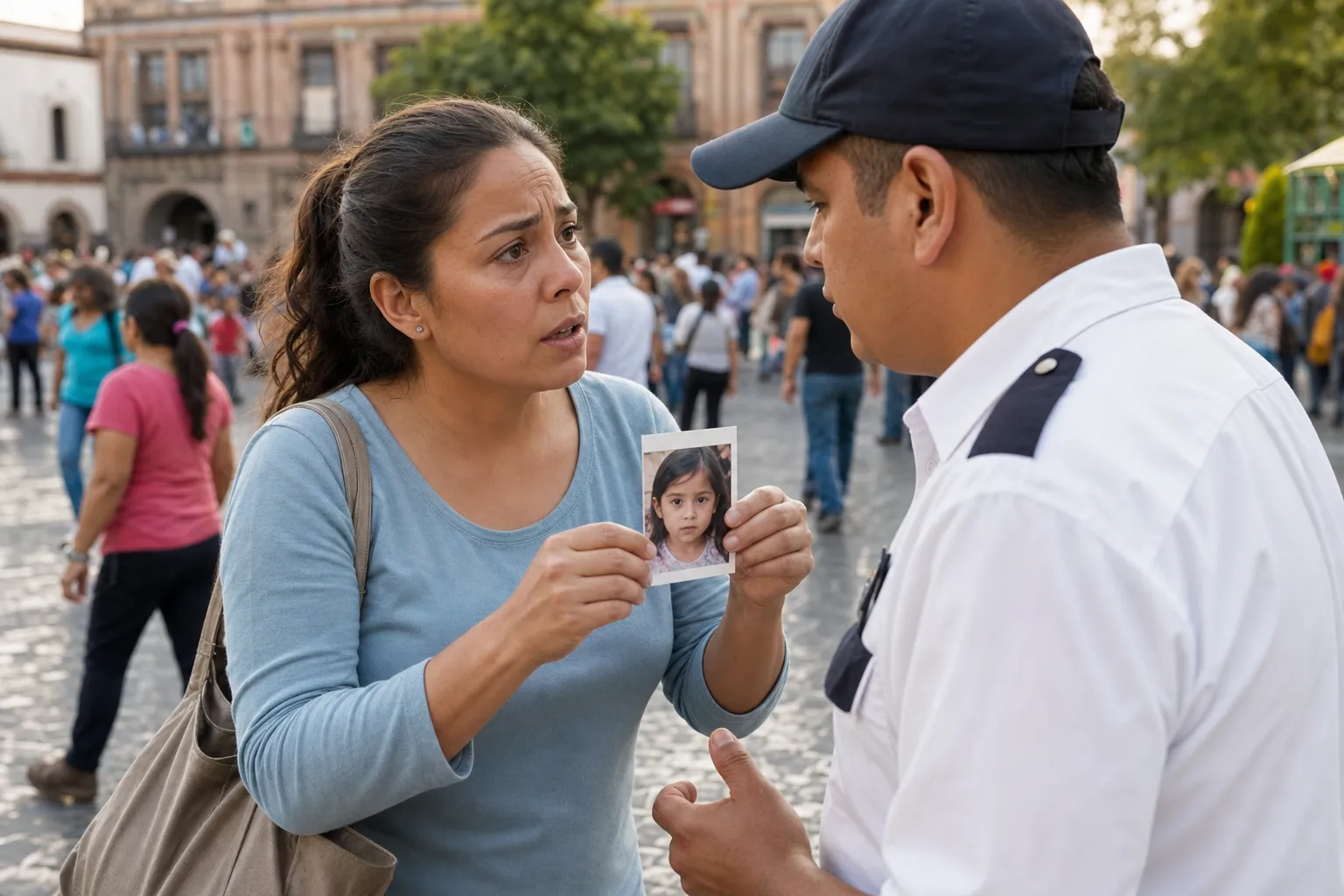
emergency
A1Spanish phrases for Lost Child
Find help when a child is lost. In urgent moments, short clear Spanish helps others help you faster — practice these lines before you need them.
This guide to Lost Child is for beginners learning Spanish for urgent help and safety. Emergencies demand calm, clear Spanish even at beginner level. These phrases help you call for help, report theft or injury, and follow instructions from police, medics, or staff.
A1 Spanish means simple verbs and familiar nouns. The goal is communication, not perfection — locals respect the effort. Most people will speak at normal speed, but they usually slow down if you ask politely or look confused. Do not worry about every verb ending — tone and key words carry the message at A1 level.
Core phrases include "Mi hijo se perdió", "Lleva camiseta roja", and "¿Lo ha visto?". Practice them in order or jump to the line you need most — every phrase includes a natural English gloss so you never guess the meaning.
Record yourself saying two phrases back-to-back, then compare with Slapp audio. Small gaps in pronunciation shrink quickly when you practice with feedback and repetition. Treat this page as your script and Slapp as your rehearsal room. Short daily practice beats last-minute panic every time.
Browse all fifteen phrases for lost child below — each with Spanish, English, and Slapp practice when available. Focus on emergencies and urgent situations vocabulary you will reuse in nearby situations too.
15 A1 phrases for this scene
Phrase 1
Phrase 2
Phrase 3
Phrase 4
Phrase 5
Phrase 6
Phrase 7
Phrase 8
Phrase 9
Phrase 10
Phrase 11
Phrase 12
Phrase 13
Phrase 14
Phrase 15
The Slapp 5× repeat method
Don't cram. Let your brain collect the pattern in the background.
- 1Listen to the phrase audio once without pressure
- 2Read the Spanish and English together
- 3Replay tomorrow — same phrase, fresh context
- 4Repeat on day 3, day 5, and day 7
- 5Move on when it sounds obvious